AI-Native by Design: What We Learned Building TensorRT-Model-Connect
How parallel work, model-family isolation, reversible changes, and GPU-backed validation shaped an open-source project designed around coding agents.
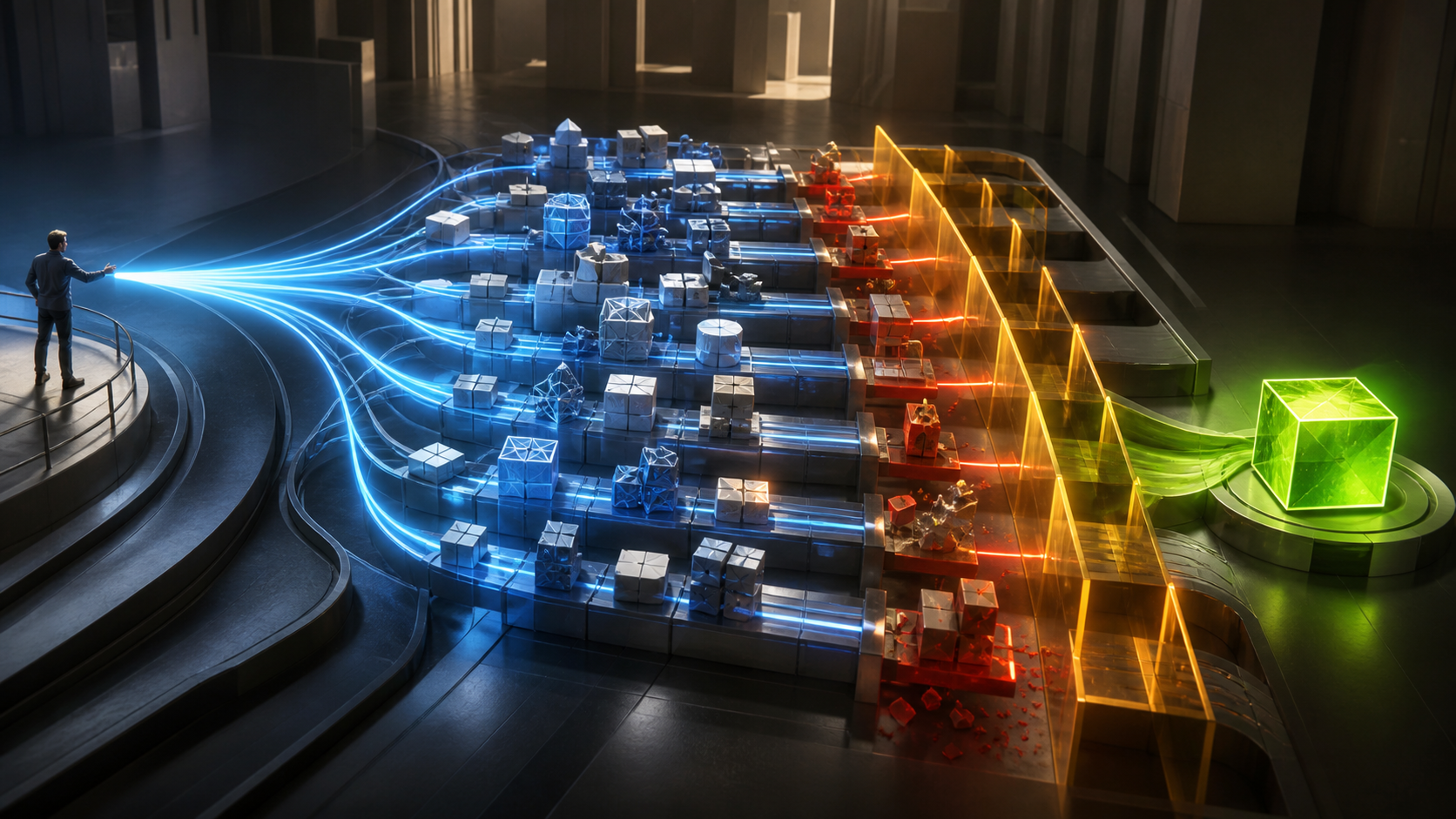
Many untrusted candidates enter the system. Architecture, independent challenge, and evidence determine what deserves to emerge.
TensorRT-Model-Connect began with a practical question: could we make the performance of NVIDIA's inference stack accessible to model developers who are not TensorRT experts?
I initially approached the project as an experiment with coding agents. Within the first few days, however, I became more interested in a larger question: what would it mean to design a serious software project around AI agents from the beginning—not merely use an agent to accelerate an existing development process?
Our answer has not been an elaborate orchestration system or an ever-growing collection of prompts. It has been a set of engineering choices:
- choose work that can scale horizontally;
- give agents outcomes and objective references instead of prescribing every implementation step;
- isolate model-family changes so failures remain local;
- make changes easy to evaluate and revert; and
- treat automated validation as the production constraint.
That is the sense in which Model Connect is AI-native. AI increases the rate at which we can produce candidate implementations. Architecture and validation determine whether that increased output becomes reliable software.