

normals_xz (FET001 Visual)#
Property |
Value |
|---|---|
Test name |
normals_xz |
Feature(s) |
|
Engine |
Kit / Isaac Sim (>=2024.2.0) |
Test version |
2.0.4 |
Summary#
Rotates the asset through a sampled combined X-and-Z sweep under dome lighting and checks the count of frames whose diagnostic surface is too dark.
What Pass Guarantees#
Required pixel thresholds/fractions must be finite real numbers in [0, 1];
step/problem-frame counts positive whole numbers, min_problem_frames <= steps, and settling count a
nonnegative whole number. Camera padding/load timeout must be finite and
positive. Invalid booleans, strings, nonfinite values or domains stop before
scene mutation as configuration errors. Defaults and valid zero fractions
remain unchanged. Missing/invalid image analysis does not become a zero
problem count. At least min_problem_frames captured frames must have at
least 100 object pixels each. Too few usable frames is an incomplete
measurement/runtime error, not an asset FAIL or PASS. Host checks do not
qualify the native renderer.
A pass means fewer than min_problem_frames sampled frames exceed
max_problem_ratio dark object pixels. Defaults allow one such frame, and
frames with fewer than 100 object pixels do not count as problems or enter
the average-darkness denominator. Their zero-based indices and counts are
reported as normals_xz_omitted_indices / normals_xz_omitted_frames, alongside
normals_xz_qualified_frames. This image
proxy does not establish every normal’s direction, exclude smaller dark patches,
or certify unsampled viewpoints.
What It Checks#
The test counts sampled frames with an excessive dark-object-pixel fraction. Inverted normals are one possible cause of dark patches; inspect the geometry and diagnostic scene before treating this image proxy as an authoring diagnosis.
The combined rotation (X at 70 percent amplitude, Z at 100 percent) sweeps the asset through diagonal angles where beveled, chamfered, or angled faces become visible. A rotation around a single axis would keep many of these faces edge-on and miss the defect.
How It Works#
The asset is loaded in a white room with dome-only lighting (intensity 2000) and an orange matte diagnostic material. Double-sided rendering is enabled during capture so that face culling does not interfere with the dark-pixel analysis.
Eight rotation steps are captured (steps = 8). At each step the asset is rotated with X at 70 percent of the step angle and Z at 100 percent (rotate_asset_multi). The camera is re-framed after each rotation. For each frame, object pixels are masked against the white background and the fraction of dark pixels (luminance below dark_threshold = 0.15) is measured.
A frame is counted as a problem frame when more than 50 percent of its object pixels are dark (max_problem_ratio = 0.50). The test fails when the number of problem frames reaches or exceeds two (min_problem_frames = 2). This threshold prevents a single interior-exposed angle from failing the test.
A visibility pre-check compares a framed diagnostic capture with the same scene after temporarily hiding the staged asset. At least 100 diagnostic-colored pixels must change. Orange scene content that remains when the asset is hidden does not prove visibility; an asset with no attributable pixels fails before the sweep. The asset is restored before the sweep.
Failure Cases#
Symptom |
Likely cause |
|---|---|
Two or more rotation frames show more than 50 percent dark object pixels |
Surface normals on one or more faces are inverted; affected faces receive no dome illumination |
Fewer than 100 asset-attributable diagnostic pixels in pre-check |
Asset not loaded, hidden, or camera framed incorrectly |
How to Fix#
If the sweep fails, first inspect the dark frames and verify the lighting, framing and diagnostic-material setup. Check the corresponding geometry for inverted, invalid or missing normals; darkness alone is not a definitive cause. Correct confirmed authoring defects, re-export and rerun.
The combined X-and-Z sweep is specifically designed to expose diagonal faces that a single-axis rotation keeps edge-on. If only a small number of diagonal faces are affected, they might only appear dark during the XZ sweep and not during purely horizontal or vertical rotation.
Expected Result#
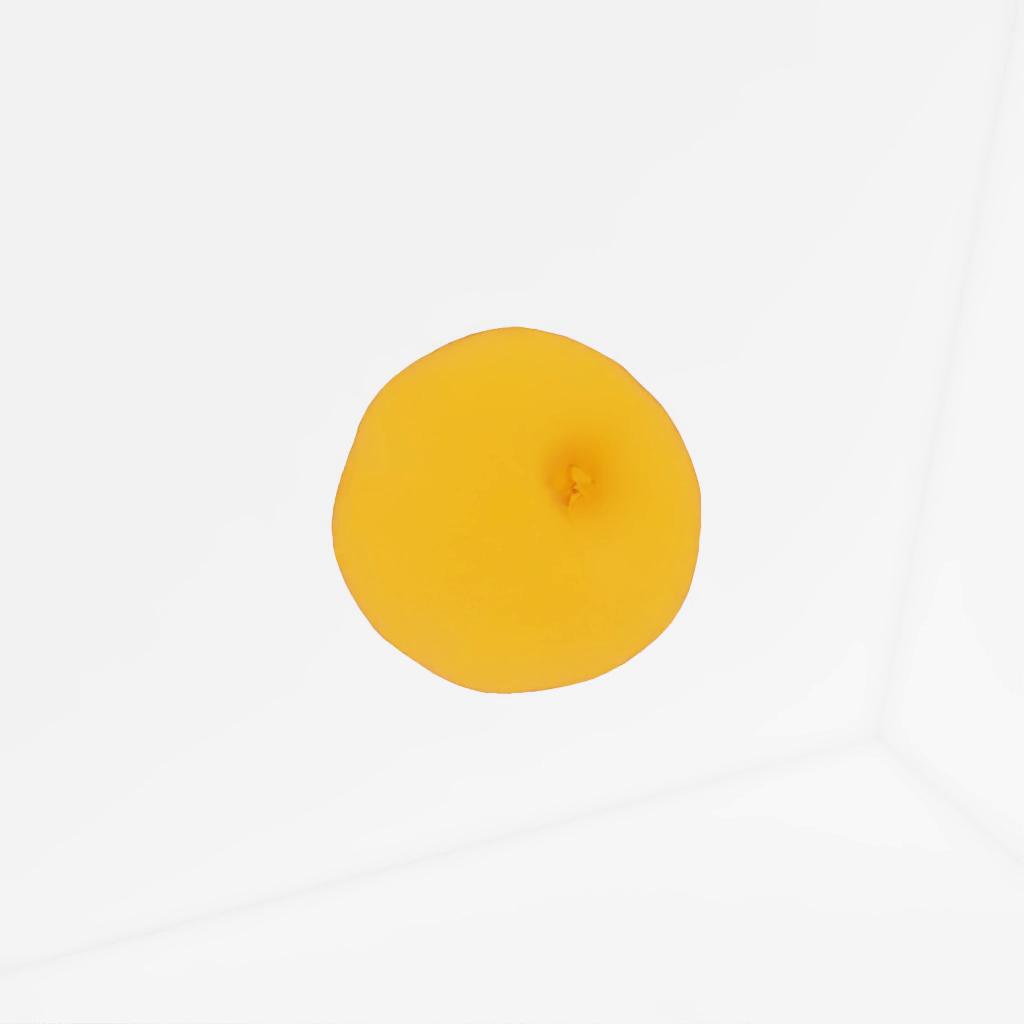
The asset rotates through sampled pitch-and-yaw poses under dome lighting. Inspect dark patches alongside the problem-frame count and configured tolerance; even a passing run may contain dark patches or one default problem frame.
Notes and Caveats#
Dome-only lighting is used so that every face with outward-pointing normals receives equal illumination regardless of its orientation. A directional light would produce natural shading variation that would be indistinguishable from inverted-normal darkening.
The min_problem_frames = 2 threshold prevents a false failure when a hollow object’s interior is briefly exposed at one rotation angle. A single interior-exposed frame is not treated as a defect.
Frames with fewer than 100 object pixels are excluded from the problem-frame count and darkness statistics to avoid false positives from edge-on or heavily foreshortened poses. They are not measured as zero darkness. The minimum usable count makes the existing failure threshold reachable, without inventing a new coverage percentage. An omitted view may be a legitimate edge-on pose or a rendering/framing problem; diagnose it before assigning an asset defect. This qualification can now expose incomplete measurements that older code falsely presented as PASS.
Video encoding is optional presentation when the owned encoder returns None
for a recoverable failure; warning transport cannot replace measured PASS/FAIL.
Unknown engine/session exceptions and unsafe media paths still propagate, as
do required capture/analysis errors, cancellation and required-cleanup signals.