


Architecture#
Isaac Teleop is the unified framework for high-fidelity egocentric and robotics data collection. It streamlines device integration, standardizes human demo data collection, and fosters device and data interoperability.
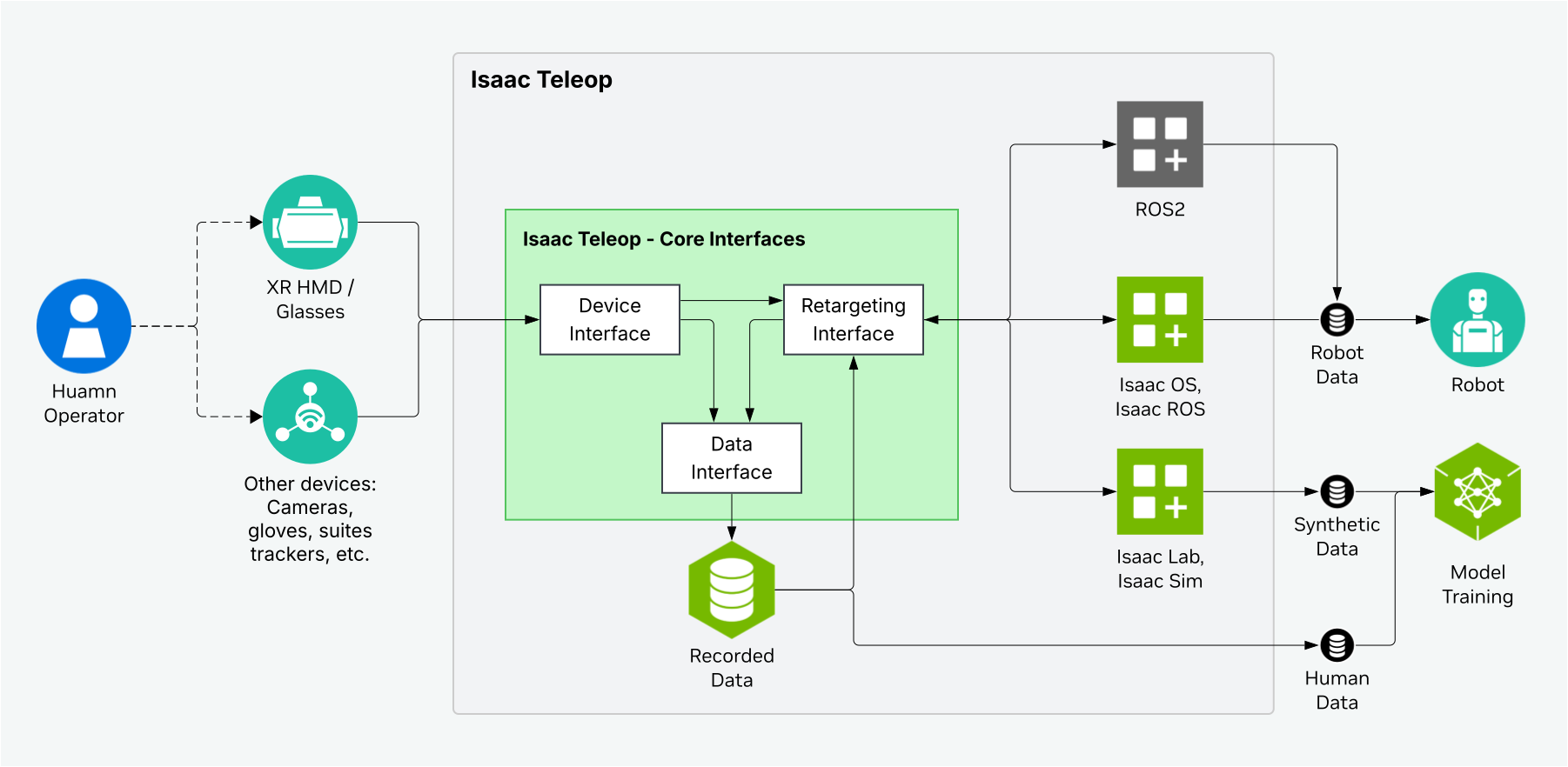
Figure: Isaac Teleop high-level architecture#
The core components of Isaac Teleop are:
Unified Device Interface#
Support for major XR headsets, including Apple Vision Pro, Pico, Quest, and others
Seamless integration of USB and Bluetooth peripherals (e.g., gloves, pedals, body trackers)
Extensible interface enabling vendors to add custom or proprietary devices
Consistent timestamping for multi-device streams, synchronized via unified device input control loop
Retargeting Interface#
Tensor in, tensor out, GPU acceleration ready
Reuse schema from the data interface
Handle both a single data point, or an entire trajectory
Data Interface#
Standardized data schema defined in the FlatBuffers (fbs) format.
Data recording & playback with mcap
Dataset interoperability with LeRobot
Visualization (Televiz)#
Televiz (isaacteleop.viz) is a lightweight compositor module for visualizing what the operator
sees — camera and sensor feeds, plus 3D rendered content — in an XR headset or a desktop window.
Composites multiple sources into one view: 2D camera/sensor planes (
QuadLayer) and full-view stereo RGBD (ProjectionLayer) for 3D rendered contentPer-eye stereo rendering and 3D placement in XR; the same API drives windowed and offscreen output
Zero-copy submission of GPU frames straight from CuPy, PyTorch, or any CUDA memory object
Shares one OpenXR session with the teleop device trackers, so rendering and tracking can run over a single CloudXR connection
See Televiz for the module API and Camera Streaming for the reference camera-streaming sample.